 Clear Route Home
Smoke Alarms for Deaf or Hard-of-Hearing People
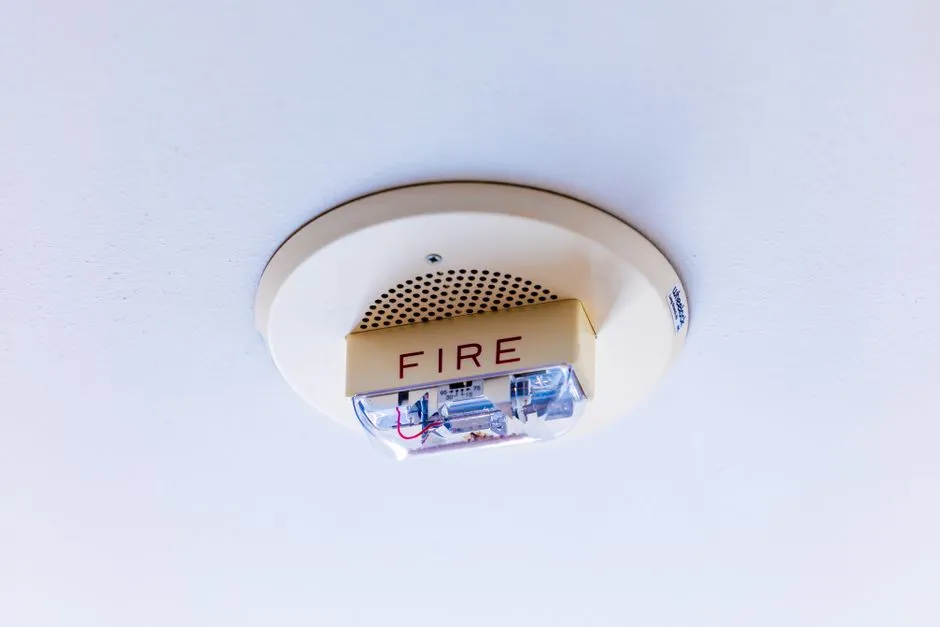
- What smoke-alarm warning does a person with hearing loss need?
- How are smoke detection and notification different?
- Why must daytime and sleeping needs be considered separately?
- Which details should you confirm before choosing equipment?
- Does accessible notification change smoke-alarm placement?
- How should testing and maintenance be organized?
- What should renters or households seeking assistance ask?
- How does the warning connect to an escape plan?
- Sources
What smoke-alarm warning does a person with hearing loss need?
A person who is deaf or hard of hearing needs a fire-warning arrangement they can perceive, including while asleep. Depending on individual needs, that can involve compatible strobe lights, vibration devices and specialized audible alerts alongside smoke detection. Ask your local fire service and a qualified installer to assess the complete arrangement; no single feature guarantees waking. In a suspected fire, leave when possible and contact emergency services from a safe location.
An accessible warning is not simply a louder version of an ordinary beep. Start with the person, the rooms they use and their sleeping arrangements, then establish which equipment is suitable. This is a preparation and question guide, not installation instructions or a product certification.
How are smoke detection and notification different?
Smoke detection identifies smoke. Notification is the signal intended to tell someone that action is needed. An additional alerting device may receive a signal from an existing smoke alarm rather than contain its own smoke sensor.
The Oregon State Fire Marshal distinguishes a self-contained smoke alarm from a smoke detector that signals a larger alarm system. Do not use a retailer's loose wording to decide which functions a product actually supplies.
Fire Protection Publications at Oklahoma State University describes hearing-loss alert devices that respond to another alarm's sound. That distinction matters: adding notification does not remove the need for working smoke detection.
Ask the manufacturer or installer to identify the detection equipment, the notification equipment and how the two communicate. Obtain confirmation for the exact models, not merely the same brand name.
Why must daytime and sleeping needs be considered separately?
Noticing a signal while awake does not establish that the same signal will wake someone. The Honolulu Fire Department describes strobe-equipped alarms for alerting a person while awake and pillow or bed shakers designed to wake a sleeping person.
Discuss the actual sleeping situation: which room is used, whether someone sleeps elsewhere occasionally, what hearing technology is or is not worn, and any additional sight or mobility needs. The person receiving the warning should participate directly, using their preferred communication method.
A daytime demonstration is useful for recognizing a signal, but it is not a clinical sleep study or a guarantee of future response. Do not conduct a surprise overnight experiment to decide whether equipment is adequate. Obtain professional guidance about appropriate notification and the manufacturer's approved checks.
| Function to discuss | What it contributes | What it does not establish alone |
|---|---|---|
| Smoke sensing | Detects the hazard the equipment is designed for | That every resident perceives the warning |
| Visual notification | Provides a visible warning | That a sleeping person will wake |
| Tactile notification | Provides vibration intended to alert the user | That every device works with every alarm |
| Specialized audible notification | Provides a sound suited to particular needs | Suitability for every degree or type of hearing loss |
This is a functional comparison, not a ranked shopping list. A qualified assessment determines the appropriate combination.
Which details should you confirm before choosing equipment?
Ask for the exact model numbers and current instructions before making a purchase decision. Honolulu's fire-safety guidance recommends equipment bearing the label of a recognized testing laboratory. Ask the installer or manufacturer to explain which functions and components the relevant listing covers.
Our editorial checklist separates evidence from assumptions:
- Which device detects smoke, and which device supplies the accessible warning?
- Is the proposed combination explicitly supported by the manufacturers?
- Which warning is intended for each sleeping location and occupied area?
- What power source does each component use?
- During a power failure, which detection and notification functions remain available, and under what stated conditions?
- What fault, disconnection or low-power indication should the user recognize?
- What maintenance and replacement instructions apply to each component?
Write “not yet confirmed” where documentation is missing. Do not interpret a battery in one unit as proof that every connected light or vibration device has equivalent backup. Ask about each function separately.
Do not substitute a general-purpose phone app, smart-home routine or vibrating alarm clock for assessed fire-warning equipment. A convenient notification feature is not, by itself, evidence of suitability for this life-safety purpose.
Does accessible notification change smoke-alarm placement?
It does not make the home's smoke-detection coverage optional. The U.S. Fire Administration's smoke-alarm guidance recommends alarms in every bedroom, outside each separate sleeping area and on every level, including the basement. It also recommends interconnected smoke alarms so activation of one causes the others to sound.
The same guidance routes local alarm-type requirements to the fire marshal and hardwired installation to qualified electricians. Have a licensed professional handle electrical work; follow current local requirements and the exact product instructions.
Our smoke-alarm placement guide explains the wider coverage question. Do not remove an existing alarm or alter wiring to make an accessory fit. Notification-device locations also need their own manufacturer and professional assessment.
How should testing and maintenance be organized?
USFA's smoke-alarm pictographs specify testing smoke alarms at least once a month using the test button. Follow the instructions for the complete arrangement, including connected notification devices; do not assume a sound from one unit confirms all functions.
Ask the qualified installer to demonstrate the approved checks and provide accessible instructions. Clarify which observations the resident can make and which work requires professional service. Never use a flame or create smoke to improvise a household test, and never open electrical equipment.
An original maintenance record can use four fields: date, exact device checked, observed response and follow-up action. For example: “Bedroom notification unit; prescribed check not completed; installer contacted.” This is an unresolved task, not a passed test.
If a device fails its specified check or a resident cannot perceive the intended warning, contact the fire service through its nonemergency route and the responsible installer promptly for assessment and immediate interim arrangements. Do not mark the system satisfactory because another resident heard a beep. For an actual or suspected fire, use emergency services.
What should renters or households seeking assistance ask?
Describe the unmet need specifically to the property manager or landlord: “The current warning is not perceptible to the resident in their sleeping arrangement.” Request an assessment and documented next steps. This wording identifies a functional problem without claiming a universal legal remedy or deadline.
USFA notes that some fire departments offer reduced-cost or free smoke alarms. Contact the department's nonemergency service to ask whether help with accessible equipment or assessment is available locally. A general smoke-alarm program does not guarantee specialized equipment, funding or eligibility.
Keep the equipment discussion separate from an emergency report. Do not use an emergency number for ordinary product shopping, but do not wait for a property-management reply during a fire.
How does the warning connect to an escape plan?
Detection and notification are only part of preparation. The USFA disability fire-safety guidance emphasizes planning around a person's abilities. An alert does not resolve a blocked exit or an unmet assistance need.
Discuss evacuation and assistance with the local fire service before an incident. Our home fire escape plan guide covers the household plan; do not interpret a window on a drawing as permission to jump or attempt an unsafe descent.
The USFA escape-planning guidance calls for household practice and an outside meeting place. Include a usable way to contact emergency services, confirmed for your locality and communication needs. Do not assume a text message automatically reaches the local emergency service.
In a suspected fire, leave immediately when possible, contact emergency services from safety and stay out. If escape is blocked, contact emergency services immediately and give your location; follow their instructions. Tell responders about anyone still inside. Equipment research or a maintenance checklist must never delay emergency action.
Sources
- USFA: Smoke alarms.
- USFA: Smoke-alarm pictographs.
- USFA: People with disabilities.
- USFA: Home fire escape plans.
- Honolulu Fire Department: Smoke alarms.
- Oregon State Fire Marshal: Smoke and CO alarms.
- Fire Protection Publications: Smoke alarms for people with hearing loss.
Frequently asked questions
Will a flashing smoke alarm wake a deaf person?
Do not assume that it will. Fire-department guidance distinguishes visible notification while awake from vibration devices designed for sleeping users. Ask the local fire service and a qualified installer to assess the person's complete warning arrangement, including additional needs. An awake demonstration does not guarantee a response during sleep.
Does a bed shaker also detect smoke?
Not necessarily. Some alerting devices respond to the sound or signal of a separate smoke alarm. Confirm the exact product's functions and documented compatibility with the manufacturer or qualified installer. A vibration accessory does not make working smoke detection optional, and a general-purpose vibrating alarm clock is not an assessed fire-warning arrangement.
Can I install an accessible alarm myself?
Have a qualified professional assess the equipment, placement and compatibility, and use a licensed electrician for hardwired work. Follow the manufacturer's instructions and current local requirements. This guide does not provide wiring or mounting procedures. Do not remove existing alarms, modify connectors or improvise an adapter to make an accessory work.
How often should accessible smoke alarms be tested?
USFA recommends testing smoke alarms at least once a month with the test button. Follow the complete system's instructions for checking associated lights or vibration devices as well. Ask the installer to demonstrate the approved procedure. A sound from one alarm does not establish that every notification function worked as required.
What if the warning does not reach someone who is asleep?
Contact the local fire service through its nonemergency route and the responsible installer promptly for assessment and immediate interim arrangements; do not treat an unresolved warning gap as satisfactory. In an actual or suspected fire, leave when possible and contact emergency services from safety. If escape is blocked, report your location immediately.